

Research Facilities
Inspired by Innovation, Equipped for Impact
The ASPEN Laboratory at SMU is inspired by innovation and equipped to deliver impact in power electronics and energy systems, supporting design, modeling, and experimental validation across electric machines, motor drives, wide-bandgap power devices, energy storage systems, and high-efficiency power converters. Our facilities include state-of-the-art dynamometers, battery cycling and thermal management platforms, high-speed data acquisition systems, and acoustic and vibration measurement tools, enabling rigorous component-level research and integrated system-level studies under real-world operating conditions across transportation, grid, and data-center applications. We also have access to several innovation and testing spaces, such as the Deason Innovation Gym (DIG), Hart Institute IoT studio and the Lyle machine shop.
Design, Testing and Validation
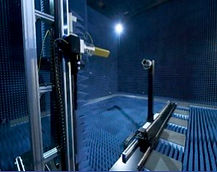
ASPEN’s design, testing, and validation capabilities support rigorous evaluation of power and energy systems from component-level prototypes to fully integrated hardware. Facilities include motor–drive dynamometers, battery cycling and thermal management systems, programmable power supplies and loads, power analyzers, precision current and voltage probes, source/measure units, oscilloscopes, mixed-signal scopes, and frequency-domain instrumentation. These capabilities are complemented by access to a controlled anechoic chamber environment, supporting electromagnetic and system-level assessments where relevant. Together, these resources enable performance benchmarking, control validation, efficiency and loss analysis, and reliability testing of power electronics, motor drives, and energy storage systems under realistic operating conditions.




System Integration and Rapid Prototyping
Our system integration and rapid prototyping capabilities include the assembly, monitoring, and evaluation of complex power and energy systems from early concepts to integrated hardware. These resources enable hardware–software integration, real-time data acquisition, and system-level validation of electric machines, motor drives, power electronics, and energy storage platforms. Activities are complemented by the Hart Institute (HITIE) IoT Studio, which provides infrastructure for connected systems, edge computing, and data-driven monitoring, and the Deason Innovation Gym (DIG), which supports rapid iteration across electronics, embedded systems, and mechanical integration. Together, these capabilities enable end-to-end system integration, visualization, and performance assessment across transportation, grid, and data-center applications.


Chronos Slow Motion Camera w/135mm Nikon lens
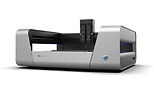
Voltera Nova Circuit Printer
Creality K1C Filament 3D Printer
Fluke Thermo Cam

Creality 3D Scanner


Characterization & Reliability Analysis
We have access to a comprehensive suite of advanced characterization capabilities to support materials, devices, and microsystems research in power and energy applications. Characterization resources include scanning electron microscopy (SEM) with EDS, digital optical microscopy, Raman spectroscopy, ellipsometry, thin-film analysis, and surface and optical profilometry (e.g., Veeco WYKO, Dektak). These tools enable detailed structural, surface, and materials characterization to inform device development, reliability studies, and multi-physics analysis across power electronics, electric machines, and energy storage research. Select equipment can leverage cleanroom access as needed, without requiring cleanroom operation for all use cases.


Device Fabrication and Prototyping
We leverage fabrication and prototyping capabilities through close collaboration with faculty and research groups in the ECE Department who operate and manage cleanroom facilities. These shared resources support thin-film deposition and patterning processes such as sputtering and thermal evaporation, plasma etching, wafer spin coating, mask alignment, and furnace processing, along with surface preparation and polishing tools. Through these collaborations, ASPEN researchers are able to integrate fabrication workflows with characterization and system-level studies, supporting device development and exploratory prototyping for power electronics, energy storage, and related power and energy research.
Mechanical Design and Fabrication
Our lab has access to the Lyle School of Engineering machine shop, which provides professional mechanical fabrication and machining support for research and instructional projects. The shop enables precision manufacturing, modification, and repair of custom components, fixtures, and enclosures, supporting prototyping and system integration efforts across power, energy, and electromechanical research.